Why we love Rosemary Essential Oil

March 28th, 2012

Maty with His Rosemary


Self-Identity & Dedication & Destiny
“Rosemary enhances the dedication of love rather than the experience of romantic ecstasy and as an oil of remembrance; it helps us not only to recall loved ones but to remember our own true path.”    Gabriel Mojay

While teaching Aromatherapy at the Arcata School of Massage, Maty one of the students asked why he might be so drawn to Rosemary. He finds the scent so powerful that when he moved from Redding, CA to Arcata, CA he brought his Rosemary bush with him.

Maty inspired me to share more information on why Rosemary is such a wonderful essential oil.

Thanks Maty and congratulation on your graduation!


Rosemary Essential Oil

The name “rosemary” is derived from the Latin ros marinus, meaning “rose of the sea”

Latin name: Rosmarinus officinalis
Extraction Method:
Steam distilled
Part of the Plant:
Leaves, twigs, flowers
Note:
Middle
Aroma:
Fresh, herbaceous, sweet, slightly medicinal


Interesting Tidbits:

  • Rosemary has been traditionally viewed as an exhilarating herb as well as a symbol of vitality and individuality.
  • Helps to realize one’s potential by boosting confidence and faith in self.
  • Rosemary reminds us to take time to stop, relax and take care of our self as everything gets better when we do.
  • The stalks of Rosemary plants when stripped of its leaves make great skewers for barbecues.
  • Branches of Rosemary used to be used for hair brushes.
  • The sprigs can be burnt and used as incense.
  • To the Greeks and Romans the plant was sacred, symbolic of loyalty and remembrance.
  • In many European homes sprigs would be presented to guests as a token of love and friendship and thought to bring good luck.

Physical Properties:

Antiseptic, analgesic, anti-depressant, diuretic, analgesic, astringent, carminative, cholagogue, decongestant, digestive, emmenagogue, expectorant, hepatic, nervine, neurostimulant, rubefacient, stimulant, vulnerary.

Rosemary is most effective in the following Primary Body Systems:

  • Cardiovascular
  • Digestive
  • Integumentary
  • Lymphatic
  • Nervous

Practical Uses for Self Care:

1. Rosemary is valuable for many respiratory problems, ranging from the common cold, catarrh (inflammation of the mucous membranes, accompanied by excessive secretions), sinusitis and asthma.

  • Methods of use: Inhalation, Hot Water Inhalation, Chest Rub,  Chest Compress


2. It is a good analgesic and may be used in massage, baths and compresses to relieve pain in rheumatism and arthritis or for tired stiff and overworked muscles

  • Methods of use: Massage, Compress, Bath, Foot Bath


3. Since Rosemary stimulates blood circulation, it is a good remedy for low blood pressure. It may be used to help relieve cold feet, tired or weak legs and circulatory problems of extremities. 

  • Methods of use: Massage, Foot Bath, Bath


4. May stimulate hair growth and prevent dandruff

  •    Methods of use: Scalp Oil


5. May be helpful for chronic fatigue, or when feeling tired, lethargic or run down, helps to balance body and mind.

  •    Methods of use: Massage, Inhalation, Chest Rub, Bath, Foot Bath


6. Great to use for those wanting to be able to concentrate and remember more effectively.

  •    Methods of use: Inhalation, Diffusion


7. It is a potent antiviral, antibacterial and anti-fungal for infections of the skin. Researchers found that rosemary is a beneficial antioxidant in creams and lotion to minimize free radical damage and protect skin from cellular damage.

  •    Methods of use: Spot Application

*** Click here to view details on all Methods Of Use.

Rosemary Chemotypes

Rosemary has several chemotypes***.   The three principal chemotypes of Rosmarinus officinalis are: camphor-borneol, 1,8-cineole and verbenon.

Due to their different compositions, these oils can be applied for different purposed to achieve maximum efficiency.

  • camphor-borneol – effective in cases of muscular aches and pain
  • 1,8-cineole – best for respiratory congestion
  • verbenon – excellent regenerative properties

***A chemotype refers to subspecies which have the same morphological characteristics but which produce different quantities of chemical constituents in their essential oils.

Morphology is branch of  biology that deals with the form and structure of organisms without consideration of function


Considerations:

Due to its stimulating action avoid use with high blood pressure and may not be suitable for people with epilepsy. Avoid use with pregnancy.


Resources:

Aromatherapy, A complete guide to the Healing Art; Authors: Kathi Keville and Mindy Green

Practical Aromatherapy for Self Care; Author: Joni Keim

Amazing Scents; Author Jennifer Jefferies

Aromatherapy for Massage Practitioners; Author Ingrid Martin

The Complete Guide to Aromatherapy; Author: Salvatore Battaglia

Aromatherapy for Healing the Spirit; Author: Gabriel Mojay


Caryn

Natural Home Cleaning with E3 Essential Oils

March 18th, 2012

Natural Home Cleaning Recipes
I know it sounds like a lot of work but the truth is once you have a few of the basic ingredients, making your own cleaning products is quick and easy; it saves time, money and is healthier for you and your family. When I first mentioned this to Caryn she did a mini groan and said that we needed to do this ourselves to prove it is easy and it works. She found everything we needed in one store, made up the cleaning solutions within minutes, discovered they work great and is now excited to use her natural healthy products. (Check out our live video demo) Essential 3 – Aromatherapy Solutions – Cleaning Part 1 

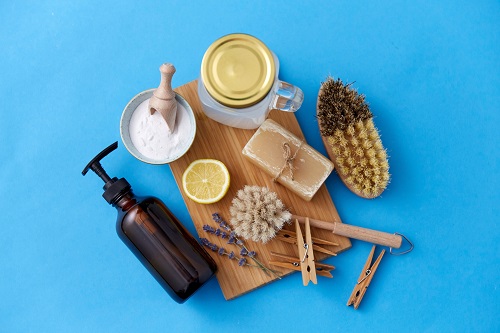
Most of what you need is available at your local grocery or discount store; pick up the following ingredients on your next shopping trip and try it for yourself.

Basic Cleaning Ingredient List:

Essential oils: (You only need one or two essential oils – Pick your favorite aromas)

Thyme Sweet – antibacterial, antiviral
Lavender – antibacterial, antiviral (I like to add Lavender for the slightly floral, fresh aroma it provides)
Tea Tree – antibacterial, antiviral, antifungal
Spearmint – antiseptic and clean fresh scent
Lemon – antibacterial; antifungal, antiviral (Nothing says clean and spring like the crisp fresh scent of Lemon)
Protection- antiviral, antifungal, antibacterial (This blend contains some of the stronger germ fighting essential oil – spicy aroma of clove and cinnamon)
Antiseptic Blend
-  antibacterial, antiviral, antifungal (Another of the stronger germ fighting blends with a lemon, eucalyptus aroma.


Other Ingredients:

Baking Soda – Sodium Bicarbonate. Baking soda makes a great gentle scrub for kitchens and bath. Available in all supermarkets as well as in bulk through discount stores.

Salt –When you need a little extra abrasive action,such as on pots and pans, add a course ground salt to your cleaning mixture. A course ground salt such as Kosher salt works best (available in most supermarkets), but I have used regular salt when that was all that was available and it still works.

White Vinegar – Vinegar is a mild acid making it beneficial in removing stains, lime deposits, mildew and soap scum; use to polish chrome, unclog drains, disinfect and deodorize. My research found that Cider Vinegar contains tannins and it may stain laundry when used during the wash. I have used both White and Cider Vinegar for cleaning glass but in general choose White Vinegar as it is much less expensive. FYI White Vinegar can be made from natural vegetable ingredients OR may be a petroleum by-product. Heinz makes a vegetable based product (we are in no way affiliated with Heinz). Check the ingredients to know what you are purchasing.   Note: Do not use Vinegar on Marble.

Washing Soda– Sodium Carbonate or Soda Ash; this is often found in the laundry aisle of your local super market.

Liquid Castile Soap– An olive oil based soap, available in most health food stores or online.

Spray bottles and Glass Storage containers


Recipes for Cleaning

Kitchen, Bath and Counter Spray Cleaner *
Mix in a sprayer bottle:

  • 1 cup white vinegar
  • 1 cup water
  • Add 10 drops of your choice of essential oils e.g. 5 drops of Lavender and 5 drops of Tea Tree or 5 drops Thyme Sweet with 5 drops of Lemon

Use in Kitchen or Bath; spray on surface and wipe with a soft cloth.


Sink Scrub *

  • ¼ cup washing soda
  • ¼ cup baking soda
  • 8 Drops of Essential oil – choose from any of the essential oils mentioned above
  • ¾ cup white vinegar to use for rinsing

Combine washing soda, baking soda and essential oils in a glass jar and shake well.  Sprinkle mixture in sink and scrub with a damp sponge. Rinse sink with vinegar and then follow with hot water.  (If you need a little extra scrubbing power add 1/8 – ¼ cup Kosher salt to the mixture and scrub well then rinse as above)


Dish Soap *

  • 22 oz Liquid Castile Soap
  • 30 drops citrus essential oils of your choice, Orange Sweet, Lemon, Lime if you would like a little additional antibacterial add 10-15 drops of Tea Tree


Toilet Bowl Cleaner

  • Mix 1/4 cup baking soda and 1 cup vinegar 10 drops of E3 Protection Blend, pour into basin and let it set for a few minutes. Scrub with brush and rinse. (Check out our video for a live demo on how well this works)


Mildew/Mold Cleaner 1*

  • Fill a small spray bottle with White Vinegar add 10 drops of Lemon, Thyme Sweet or Tea Tree essential oil. Spray on area let stand for 10 minutes, use a scrub brush or firm tooth brush to clean the area then rinse.

Mold and Mildew Cleaner 2 ***

  • Combine in a spray bottle, shake to blend, and spray on problem areas. Do not rinse. Makes two cups.***
  • Vinegar Spray
    Straight vinegar reportedly kills 82 percent of mold. Pour some white distilled vinegar straight into a spray bottle, spray on the moldy area, and let set without rinsing if you can put up with the smell. It will dissipate in a few hours.
  • Add Tea Tree oil to your Vinegar Spray


Glass stove top

  • I know this stove top cleaner works great; I boiled milk which overflowed and burnt creating a huge mess. I tried everything I could think of to gently remove the burnt milk and discovered the best way was to turn the burner on and “burn” off the mess. This worked great but it left the stove top with blotchy dull marks. I then used the vinegar, water and lemon solution and was amazed at how clean and shiny it made the stove top.
  • This simple recipe will restore your glass cook top to an almost new shine. Mix 1 Tablespoon white vinegar with 2 Tablespoon water and 3 drops lemon essential oils. Dampen a cloth with the mixture, rub well over glass cook top and wipe dry with a clean soft cloth.


Disinfectant Spay *

  • 2 Cups of Hot Water
  • 10 drops of Thyme Thymus vulgaris or E3 Protection Blend
  • ¼ cup washing Soda
  • Combine all ingredients in a spray bottle and shake well. Spray on surface and wipe clean with damp cloth or sponge.


Dishwasher Powder *

  • 3 cups Washing Soda
  • 1 cup Baking Soda
  • 10 drops Lemon
  •  Add all ingredients to a glass container, shake to mix well. Use 2 Tab of the mixture in the soap compartment of your dishwasher. If you get a residue buildup on your glasses reduce the amount of the mixture used to 1 ½ Tab


Oven Cleaner *

  • ½ – ¾ cup Salt
  • ¼ cup Washing Soda
  • 1 box (16oz) Baking Soda
  • Scant ¼ cup Water
  • ¾ cup White Vinegar
  • 10 drops Thyme
  • 10 drops Lemon or Lemongrass
  •  Combine Salt, washing soda and baking soda in a glass bowl. Add enough water to create a paste. Remove oven racks and preheat oven to 250 degrees for 15 minutes.  Turn off oven and leave the door open. Carefully spread the paste on the oven walls with a sponge and allow to set for 20-30 min. Combine the vinegar and essential oils in a spray bottle. Shake well then spray the oven walls with the vinegar and wipe clean. Rinse well.


Ready Wipes *

  • Store multiple squares of cotton cloth (eg.. old T Shirts or kitchen towels) in a glass container filled with a mixture of 1 cup water, 1 cup castile soap and 6-8 drops of Lemon, Lemongrass, Tea Tree, Lavender essential oil. After use rinse and throw the cotton squares in with your laundry. When clean add them back to your container with the water and soap.


Pee stains on carpet (presumably from pets) **

  • Blot up the initial stain, flush it with water, then apply equal parts vinegar and cool water. Blot it all up, rinse, and let dry. This will eliminate odors and stains.
  • Add a couple drops of E3 Purify to the water and vinegar solution to help remove odors


Wooden cutting boards **

  • Wooden cutting boards are great, except they can be a hothouse for bacteria (especially if grooves have been cut into the board with use). Disinfect it regularly with vinegar and Lemon essential oil to keep it (and your food) clean.


Soft Scrubber

  • Simply pour about 1/2 cup of baking soda into a bowl, and add enough liquid detergent to make a texture like frosting. Scoop the mixture onto a sponge, and wash the surface. This is the perfect recipe for cleaning the bathtub because it rinses easily and doesn’t leave grit.
  • Note: Add 1 teaspoon of vegetable glycerin to the mixture and store in a sealed glass jar, to keep the product moist. Otherwise just make as much as you need at a time. ***
  • Add 5-10 drops of any of these essential oils to add disinfecting properties as well as aromas. Lemon, Tea Tree, Pine, E3 Antiseptic Blend, Spearmint or Peppermint


Window Cleaner

  • 1/4-1/2 teaspoon liquid detergent
  • 3 tablespoons vinegar
  • 2 cups water

Put all the ingredients into a spray bottle, shake it up a bit, and use as you would a commercial brand. The soap in this recipe is important. It cuts the wax residue from the commercial brands you might have used in the past. ***


Furniture Polish

  • 1/2 teaspoon oil, such as olive (or jojoba, a liquid wax)
  • 1/4 cup vinegar or fresh lemon juice
  • Mix the ingredients in a glass jar. Dab a soft rag into the solution and wipe onto wood surfaces. Cover the glass jar and store indefinitely. ***
  • Add 3-5 drops of Lemon Essential oil to the olive oil before adding the lemon juice.


Base Recipes were taken from the following sources

* Natural Home and Garden Magazine March/April 2012)

**30 Household Products Vinegar Can Replace by Nora Dunn

*** Care2.com How to Make a Non-Toxic Cleaning Kit Annie B. Bond April 3, 2009


Aromatherapy in Hospice Care

February 14th, 2012

Guest Blogger:Nikki Hernandez, Clinical Certified Aromatherapist at The Hospice of Saint John, located in Lakewood , CO

Nikki Hernandez with a patient at the Hopsice of St. John

I have been involved in hospice care for over 20 years, and have used aromatherapy in my daily practice since 1995. I was first introduced to aromatherapy when one of my patients, had chosen various integrative modalities to compliment her standard medical treatments; she was my first introduction to aromatherapy within the hospice setting. We used essential oils as I bathed her, gave her gentle hand, back or foot massages and diffused them in her room. Thus began my introduction into the world of aromatherapy and the benefits to hospice patients as well as staff and volunteers. I went on the become certified in clinical aromatherapy

When implementing an Aromatherapy program into a Hospice setting, I would suggest you start slowly and designate a “champion”; an individual who can dedicate a portion of their time on a consistent basis to educate, answer questions and demonstrate the many benefits of aromatherapy in the hospice setting. Once the momentum builds the entire staff and facility will wonder how they ever existed without aromatherapy. The Clinical Aromatherapist position at the Hospice of Saint John started out with me dedicating 20 hours a week specifically to the aromatherapy program, within nine months there was enough of a request of my aromatherapy treatments that it was decided I would focus on the program for 30 hours a week, and by the time the program had been in effect for one year I was given a full time, 40 hour position. I continue to work as a full time Clinical Aromatherapist and dedicate all of my time to this program. Aromatherapy is no longer considered a “complementary service” as it is integrated into patient care. The Hospice of Saint John now has a functional Aromatherapy program that benefits patients, families and staff.

Here are some of the questions I get asked frequently……

Why implement an Aromatherapy Program in a hospice setting?

a.) Aromatherapy can help to controls pain, nausea and anxiety.

b.) Aromatherapy can help to control odors.

c.) Many essential oils properties include antibacterial, antimicrobial, anti-fungal and anti-viral actions,
this is of benefit during cold and flu season.

d.) The stress and agitation with patient’s decreases, thus they are calmer and happier.

e.) When the patient is in a calmer, peaceful state, both the families and staff benefit.

f.) Patients tend to live  with better quality of life when they are in a calmer state.

g.) We have seen that when patients are less distressed it is easier for the staff to support them, and we
actually have seen a reduction in workmans comp claims.

When is it best to use Aromatherapy?

a.) From the beginning of the admission of the patient; Aromatherapy can be used as a comfort care
measure, environmental as well as wound care.  To help reduce stress with patients, family and staff.

b.) During Cold and Flu season

c.) For wound care, please have your wound care for open and closed wound specialist address the
specific needs of individual patients.

How to use essential oils in the hospice setting?

a.) Diffuse with a Diffuser/Nebulizer

b.) Place 1-3 drops on a cotton ball, presented in a medicine cup (with a lid) for individual inhalation as
needed.

c.) Blended in lotion or cream to be used during a body massage, hand or foot rub.

d.)     During bed baths and whirlpools.

e.) If you have a wound care specialist they may choose to utilize various essential oils in their wound
care protocols.

Who benefits from the use of essential oils in the hospice setting? 

a.) Simply put, Everyone! Patients, family and staff members…

When we create an environment where the patient is in comfort and peace, when we create an environment when the odors wafting in and around a facility are pleasant, when we create an environment where the staff benefit from the calming, sedative or uplifting, antimicrobial action of essential oils, and when we introduce a program into the hospice facility that is self sustaining as well as revenue generating, everyone benefits.

Aromatherapy for Massage Therapists: Simple, effective ways to introduce aromatherapy to your practice.

January 13th, 2012

Adding aromatherapy to a massage or body work practice can be beneficial to both you and your clients. I have been a massage therapist for over 15 years and have enjoyed incorporating aromatherapy into my sessions; using E3 essential oils in my practice supports the health and well being of my clients and myself. Essential oils can be used to help ease muscle tension, reduce general stress or anxiety, boost the immune system, freshen and purify the air as well as to help revitalize, calm and create an environment where you and your clients just feel better.

Here are some tips and suggestions on how to easily incorporate Aromatherapy into your practice.

E3 Massage Synergy Blend added to lotion: This is a great all purpose essential oil blend to add to your unscented massage lotion; E3 Massage blend is calming and soothing to both body and emotion, it is versatile as it can be used alone or combined with other essential oils and the aroma seems to appeal to most everyone.  I use this blend with the majority of my clients; I keep the dilution low (1-3% which equals 6-18 drops of essential oil per 1 oz of lotion or carrier oil) so that it can be used for full body treatments as well as it leaves me the option of adding a few extra drops  (2-4 drops) of this or another  essential  to use for regional massage.

Coming soon:  For those therapist looking for a ready to use product, E3 will soon have  Massage Lotion – our all natural E3 lotion scented with E3 Massage Synergy Blend; it is premixed and ready to use.

Massage Blend Ingredients:
Lavender- analgesic, antispasmodic, antidepressant
Rosemary – antispasmodic, invigorating, uplifting
Eucalyptus – analgesic, anti-inflammatory, antispasmodic, uplifting, grounding
Fir – analgesic, purifying, calming, grounding
Niaouli – refreshing, soothes muscle aches
Tea Tree – anti-inflammatory, increase energy and physical endurance, purifying
Peppermint – analgesic, antidepressant, anti-inflammatory, balancing

For more information on E3 Massage Blend click here.


Spritzers:  Spritzers are great for any office but if you have a small space with limited ventilation they are a perfect way to gently scent a room and use during treatment, yet not be overpowering.

At the start of the day:  Spritzers with  containing essential oils with top/middle notes such as Revitalize or Mood Rescue are a wonderful way to set the energy for the day.   These blends are perfect to start your day as the scents gently refresh and leave an uplifting aroma but do not overpower; they also blend well with many other essential oils, thus if you are using multiple essential oils during treatment scenting your room with a lighter blend helps to prevent any “discordant” aromas.


Hot Towels: Spritz a hot towel with a Peppermint or Muscle Soothe Spritzer and then wrap the warm towel over the feet. This can be done at the beginning of a session to help moderate foot odor or end of the session to help your client feel more grounded and alert.

End of Session: Use a Peppermint Spritzer to gently reawaken your client at the end of your session. Spritz above the clients body being careful to avoid contact with face and eyes. E3 Peppermint essential oil has a crisp, clean aroma which is perfect to help to gently awaken, invigorate and energize your client.

After Session: E3 Protection Synergy Blend is one of my “Must Have” essential oils. I keep a Protection Spritzer in my office and during cold and flu season use this every day.  The combination of Cinnamon Leaf, Clove Bud, Eucalyptus, Lemon and Rosemary essential oils make Protection Synergy Blend an antibacterial, anti viral and antifungal in other words a great all round germ buster. Use to spritz the room in between sessions to help keep everyone healthy, if a client has been in with a cough or cold I will also spritz and wipe door knobs and spritz myself (make sure not to get in eyes).  This can also be used to wipe lotion bottles in between clients as well as phones and bathroom sinks; simply spritz the desired surface and wipe off with a tissue or paper towel.  (Do not use on any surface that you would not use a cleaning detergent on.)


Diffusion:  Choose your favorite essential oil or blend to diffuse in your reception area or in your massage room. If you work in a small space that does not have optimal ventilation diffusing essential oils can often over scent the room; my preference in this situation is to use spritzers. Diffusers are perfect for larger treatment rooms or reception areas.  Some essential oil suggestion for diffusion: E3 Synergy blends – Stress Relief, Mood Rescue or Pick Me Up.


Hot Stone Treatments:
Add a 2-4 drops of Tea Tree to the water helps to keep stones germ free.

Lavender is a must have for anyone doing hot stone treatments. If skin appears to red and inflamed apply a couple drops of Lavender neat (undiluted) to the area. Lavender will help to calm and soothe the irritated skin.


Table Linens:
Add a couple of drops of essential oil, such as Eucalyptus, Lavender, Lemongrass, Breathe Easy or Head Soothe to several tissues or cotton balls. Tuck in with your stored linens to keep them smelling fresh.


Face Cradle – Sinus Congestion
Add 1 drop of E3 Eucalyptus Radiata, Ravensara, Ravintsara, Lavender Spike, Breathe Easy, Cold and Sinus or Head Soothe to a tissue or cotton ball and tuck under the sheet or on the outer edge of the face cradle cover; this helps your client to breathe easier while in prone position. Placing the tissue or cotton balls in this manner softens the aroma of the essential oil so that it is not overpowering and also ensures the clients face does not come in direct contact with the essential oil.

Aromatherapy as an Add on Service
Aromatherapy as an add-on service is a wonderful way to enhance revenue as well as help to educate clients to the benefits of using essential oils. Due to time constraints, limit the number of essential oils your client can choose from to between 3-5 scents. Remember do not have essential oils for your clients to choose that are not appealing to you on that particular day – use of aromatherapy should be beneficial for both of you. Keep 7-10 bottles of different E3 essential oils or synergy blends and choose 3-4 each day;  before your session put one drop of each on a cotton ball, when your client comes into the room  have them smell each one and choose their scent(s)of the day.  It is helpful to have a small jar of coffee beans with your essential oils to clear the nose if needed.  I would also recommend keeping small bottles of lotion premixed with the different scents to avoid taking up time during sessions to mix essential oils.

Essential oils in palm of hands:
Add 1 drop of essential oil to the palm of your hand rub together and as you cradle the clients head at the beginning of a massage ask them to breathe deeply. This method can support client to enter into a more relaxed and balanced state of being before treatment.  Some therapists choose to always use the same essential oil for this process.  The benefits to doing this is that the scent can trigger a conditioned relaxation response as soon as your client inhales the aroma; just be sure that the aroma is appealing to your clients.


Precautions:   Please remember to learn about the safety of the essential oils that you use in your practice. It is always best to get permission from clients when using essential oils. I generally opt to be over caution with women who are pregnant or nursing and avoid using any essential oils or blends during treatment.


(Please check back to see my next blog for more information on choosing essential oils specific to your practice – Lakita)


The Great (Unscientific) Helichrysum Experiment

January 3rd, 2012

Helichrysum italicum

Those of us who treasure the aromatic life are always looking for ways to use our precious essential oils. What better place to be presented with an opportunity than in a garden amongst the living plants.

On a warm, summer afternoon, I was working in my large, English-style garden and decided to remove a low bush. It had been growing for about four years and the roots were large and well established in the ground. I knew it was going to take some effort to get it out.
With the pruning shears, I cut back the branches so I could get a better grip on the thicker, remainder of the plant. The pruning left stiff, pointed ends throughout. I took a shovel and went around the base to loosen the roots, gave it tugs, and continued to cut the roots with the shovel until it began to come free.
Finally, it felt loose enough and I grabbed a hold, pulled hard, and one section broke free. A pointed end of a branch hit directly on the shinbone of my left leg. Ouch! (And I was in shorts.) Undaunted, with the rest of the plant still in the ground, I shifted positions so as not to repeat the same injury. The plant broke free and a pointed end jabbed my right shinbone, in exactly the same location as it did on the left. This one really hurt. Swollen, red bruises were now on both legs. Ouch, ouch!
Oh my, I thought, what a golden opportunity to test Helichrysum for its anti-bruising and healing properties!
I chose to work with the bruise on my right leg because it was the worst. I made a 1% dilution of E3 Helichrysum in jojoba oil and applied it every 15 minutes for the rest of the day. (Helichrysum is believed to work better at a lower dilution.) The next day, I applied it once an hour. By the next day, the bruise with the Helichrysum application was no longer swollen and was pink. The bruise on my left leg was still swollen, tender, and black and blue. I continued to apply the Helichrysum four times a day for the next two days. In five days, the wound receiving Helichrysum was barely noticeable and I stopped application. The untreated leg took about ten days to completely heal.
What does this all mean? It is unscientific, but the results were clear. The injury on the right leg, the worse one, healed quicker than the one on the left, in what appears to be due to the E3Helichrysum applications.
Helichrysum is a remarkable essential oil. It is extracted from the aromatic herb that is native to the Mediterranean region. It has woody stems, small and long narrow leaves, and produces a bright, daisy-like flower. The aroma is warm, rich, and herbaceous. The essential oil, also known as Immortelle and Everlasting, is highly regarded in aromatherapy as a skin “healer.” It is unsurpassed for treatment of bruises, cuts, and scars.
Joni Keim, Aromatherapist, Author, Educator

Psoriasis

October 20th, 2011

Thyme

Recently I was asked if essential oils can help with Psoriasis. Most resources cite the difficulty in treating psoriasis with traditional medicine or with complimentary care but for some people essential oils can decrease the number of outbreaks as well as help to alleviate the severity and discomfort of symptoms.

Psoriasis is an autoimmune disease which causes an overgrowth of skin cells. The affected skin becomes irritated, dry, itchy red, thick and scaly; it can appear anywhere on the body but is most often seen on the elbows, knees and trunk. The cause is attributed to genetics and environmental factor; common triggers for flare ups are stress, excessive alcohol consumption, infections, injury to skin (e.g. sunburn, bug bites etc.), cold weather, some medications and smoking.

For more information on the different types of psoriasis, its symptoms and cause please refer to: www.mayoclinic.com/health/psoriasis/DS00193 or www.ncbi.nlm.nih.gov/pubmedhealth/PMH0001470/

How to use essential oils:

Topical application: A 2 – 2 1/2% essential oil dilution (12-15 drops of essential oil(s) to 1 oz carrier oil)  applied daily to the affected area has been shown to be beneficial.   The carrier oils most recommended are Sweet Almond, Tamanu, Rose Hip and Jojoba all of which have beneficial properties to help soothe and heal irritated skin.

Lavender

Essential Oils

Lavender Lavandula angustifolia, Rose Rosa damascene and German Chamomile Matricaria chamomilla help to decrease sympathetic nervous system activity and are anti-inflammatory. Use any of these essential oils to create the base of your blend.

Add a few drops of Mandarin Citrus deliciosa, Rose, Geranium Pelargonium graveolens, or Palmarosa Cymbopogon marntinii to help soften your skin.

To support wound healing and prevent infection add a few drops of Bergamot Citrus Bergamia or Thyme ct. linalol Thymus vulgaris.

An Example of a psoriasis blend recipe
4 drops Lavender
3 drops German Chamomile
3 drops Mandarin
3 drops Bergamot
2 drops Rose
1 oz (30ml) carrier oil


Stress and Psoriasis

Aromatherapy is an easy and effective way to help calm body and mind, reduce stress and therefore help decrease the frequency and / or severity of psoriasis flare ups.

Lavender, Rose, Geranium, German Chamomile, Bergamot essential oils are all beneficial for stress relief or mild depression. They can be used in a diffuser, direct inhalation, baths, body lotion, massage or spot application.

Thyme ct. linalool and Palmarosa can be used for diffusion, inhalation and spot application.

Synergy blends to calm and sooth: Use in baths, massage, diffusion, body oil/lotion inhalation or after shower
Stress Relief
Ingredients: Lavender, Mandarin, Bergamot and Clary Sage

Relax
Ingredients: Geranium, Lavender, Marjoram Sweet, Vetiver

Meditate
Ingredients: Bergamot FCF, Cedarwood Atlas, Frankincense, Patchouli, Sandalwood

Methods of application

After Shower: After showering, while your skin is still wet, put 1-3 drops of essential oil in the palm of one of your hands and rub your hands together. Quickly and evenly spread the essential oil over your legs, arms, and torso. Avoid sensitive-skin areas. Wait for 30 seconds, breathing in the aroma, and then pat your skin dry.

Bath: Mix 4-8 drops of essential oil in 1 teaspoon of carrier oil, preferably fractionated coconut oil. (You can also add the essential oil to 1/2 cup of whole milk or heavy cream.) Set aside. If you have muscle aches, add Epsom or Dead sea salts. Fill the tub with warm water and immerse yourself. Add the essential oil mixture and swirl the water around you. Massage your skin and breathe in the aroma. Remain in the tub for 10-15 minutes.

Body Lotion: Add 6-30 drops of essential oil in 1 ounce of fragrance-free, natural moisturizing lotion. Apply to your skin, especially after a shower or bath.

Body Oil: Mix 6-30 drops of essential oil in 1 ounce of carrier, such as fractionated coconut oil or sweet almond oil. Apply to your skin, especially after a shower or bath.

Diffusion: Follow diffuser manufacturer’s instructions to fill the air with therapeutic aroma.

Inhalation: Put 1-3 drops of essential oil on a tissue and inhale the aroma through your nose. Pause and inhale again. (Avoid touching your nose with the tissue.)

Massage: Mix 6-30 drops of essential oil in 1 ounce of carrier oil or fragrance-free, natural lotion.


Feel Good Facial Compresses with Essential Oils

October 5th, 2011

As a licensed aesthetician, I had a skin care practice in Sonoma County, CA for many years. It was unique at the time because it embraced a wholistic, natural approach to skin care, without compromise. The very best products and techniques were used to not only nurture and rejuvenate the complexion, but also to uplift and transform the spirit. The use of essential oils was integral from start to finish. 

Each client received a two-hour, custom treatment to suit their skin type, and treatments varied accordingly. However, everyone received facial compresses. For many, this step was the favorite—warm water, a soft cloth infused with heavenly essential oils, and gentle pressure from guided hands.


Facial compresses are indispensible in a professional setting, and they are equally beneficial at home.  Why are they so wonderful? Simply put, they are good for you—physically and psychologically. Your skin benefits from being hydrated, cleansed, and treated with the properties of the essential oils. The warmth of the water stimulates circulation and supports glandular function. (All of these actions help to keep your skin vital and youthful.) Your psyche is transported, comforted, and renewed. The experience is rejuvenating on all levels and will have you feeling good. Feeling good is good. We like that. We need that.


Follow these steps in the evening. Compressing can stand alone as a skin care treatment, or it can be used as a pre-cleanse step in your bedtime skin care routine.

1. Thoroughly rinse a clean washcloth to remove any detergent residue.

(Unfortunately, there is detergent left behind even after a hearty spin in the rinse cycle of your washing machine—and detergents have no place in skin care.) Use a clean washcloth, every time, because bacteria can grow quickly. I bought a package of twelve that I use exclusively for my facial compressing—an indulgence worth doing.


2. Fill the basin with cool, tepid, or warm water depending on your skin type. Avoid using water that is too cold or too hot.

Normal: tepid to warm

Oily: tepid

Dry: warm

Combination: warm

Sensitive: tepid to warm

Blemished: cool to tepid

Mature: warm


3. Choose a skin care essential oil that suits your skin type. The following are suggestions. This is not a comprehensive list and there are others that can be used as long as they are skin-compatible. Put one or two drops in the basin of warm water and agitate the water to mix well.

Normal: Lavender, Geranium, Ylang Ylang, Orange

Oily: Lavender, Geranium, Orange

Dry: Sandalwood, Geranium, Rose, Ylang Ylang

Combination:  Lavender, Geranium, Ylang Ylang, Orange

Sensitive: German Chamomile, Rose

Blemished: Lavender, Geranium, Tea Tree, German Chamomile (esp. if inflamed)

Mature: Neroli, Lavender, Frankincense, Rose, Sandalwood


4. Lean over the basin, dip the washcloth in the water, wring slightly, and hold the washcloth to your face for a few moments. Keep your eyes closed. Breathe in the aroma.

5. Repeat the dipping and applying process for at least five times. Of course, you can do as many as you like.

6. At this point, you can continue with the rest of your skin care routine. For many, simply patting dry and applying a moisturizer completes the process.


Let us know how you experience this, and especially which essential oils were your favorites.

Happy compressing!!

Joni


Rosacea

August 27th, 2011


Geranium


Recently we were asked about how essential oils can help alleviate the symptoms of Rosacea.

What is Rosacea?

“Rosacea  is a chronic skin condition involving inflammation of the cheeks, nose, chin, forehead, or eyelids. It may appear as redness, prominent spider-like blood vessels, swelling, or skin eruptions similar to acne.”

Cause:
The cause of Rosacea is unknown but symptoms are more likely to show in people with fair skin, who blush easily; those between the ages of 30-50; and women more than men;  men, however,  often present with more severe symptoms.

Symptoms:

  • Redness of the face in discrete areas or covering the entire face
  • A tendency to flush or blush easily
  • Increased number of spider-like blood vessels of the face
  • A red, bulbous nose
  • Acne-like skin eruptions (may ooze or crust)
  • A burning or stinging sensation of the face
  • Irritated, bloodshot, watery eyes
Information taken from PUB MED HEALTH, www.ncbi.nlm.nih.gov/pubmed/

Triggers and Treatment
Although there is no known cure for Rosacea it is possible to avoid triggers and ease symptoms.

Triggers may vary for each person but common triggers include: too much sun exposure, extreme temperatures, stress (for more information related to stress; see below), birth control pills, alcohol, intense exercise, hot or spicy food as well as caffeine, dairy, wheat, citrus and night shade vegetables.

It is important to treat skin gently as harsh skin treatments such as facial scrubs, acne medication or rough washcloths can exacerbate symptoms.

Use only mild, all natural facial products; always use tepid water – never too hot or cold. Keep your body hydrated by drinking plenty; drinking water along with eating fresh fruit, vegetables and fiber rich foods supports colon health which helps to reduce or prevent flare ups.

Hydrosols and Essential Oils

Hydrosol: (Hydrosols, also known as floral waters, hydrolates, hydrolats  or distillates are the condensate water co-produced during the steam distillation of plant material for aroma-therapeutic purposes.)*

*  from HYDROSOLS The Next Aromatherapy by Suzanne Catty; I love this book, full of useful information.

Rose geranium hydrosol has been recommended to cool and moisturize dry irritated skin. It acts as a humectant  to help draw moisture to the  skin and is also an anti-inflammatory. Rose Geranium Hydrosol can be mixed in a 50% dilution with filtered water and kept in a small spritzer bottle to spritz your face throughout the day as desired.

Essential Oils:

Broken veins: Geranium, Neroli, Sandalwood

Redness: Chamomile Roman, Chamomile German, Lavender

Burning Sensation: Chamomile Roman, Chamomile German, Lavender

Dry Skin: Carrot Seed, Chamomile Roman, Geranium, Neroli, Rose Otto, Sandalwood

Inflamed Skin: Carrot Seed, Chamomile German, Clary Sage, Frankincense, Helichrysum, Lavender

Itchy Skin: Chamomile Roman, Frankincense, Lavender

(Any of these essential oils listed can be substituted for the essential oils listed in the 2 formulas below.)

Essential Oil Applications

From Practical Aromatherapy for Self Care by Joni Keim

Formula 1
Mix 1 drop Helichrysum and 1 drop German Chamomile in 1 tsp *Tamanu carrier oil. Gently apply – do not rub. Apply 3 times per day for a week, then 2 times a day for a week then 1 time a day for a week. This blend helps to calm skin and reduce inflammation.

Option: Add ¼ tsp of Aloe Vera to the blend

Can also use **Jojoba or Rose Hip in the blend instead of Tamanu

Formula 2

2 drops Helichrysum

2 drops Lavender

2 drops German Chamomile in 1 tsp Tamanu

(Use same application process as above)

**Tamanu carrier oil has been used extensively in hospitals in Europe, Asia and the Pacific Islands as it is known for its ability to help wounds heal, fight infection, reduce inflammation and promote healthy tissue formation. Jojoba oil is a wax ester and closely resembles the skins natural sebum. It is emollient, non- irritating and helps to reduce trans-epidermal water loss thus helping to keep skin moist. Rose Hip oil had a high concentration of the essential fatty acid, GLA which is necessary for the creation and maintenance of healthy cellular membranes though which nutrients pass into the cells. Rose Hip oil also helps to regulate sebum production and acts as an antiseptic.

Essential oils and Applications for Stress Reduction

Stress Relief Essential oils and Blends:

Single Oil Recommendations: Chamomile Roman, Clary Sage, Frankincense, Lavender, Neroli, Rose, Sandalwood

E3 Synergy Blend Recommendations: Meditate, Serenity, Stress Relief

Applications:

Diffusion: Follow the diffuser manufacture’s instructions to fill the air with soothing aromas

Inhalation: Put 1-3 drops of essential oil or blend on a tissue or cotton ball and inhale. (Avoid touching your nose with the tissue or cotton ball.) Tuck the tissue in a shirt pocket or undergarments for all day aroma.

Body Lotion: Add 3-6 drops of essential oil or blend to 1 oz of all natural, fragrance free moisturizing lotion. Apply to your skin, especially after a shower or bath.

Massage: Full body massage with stress relieving essential oils is a wonderful way to ease tension, assist the body with detoxification and increase a general sense of well being. Mix 6-12 drops of essential oil or blend in 1 ounce of carrier oil or all natural, fragrance free lotion.

Room Spritzer: Mix 25-30 drops essential oil or blend with filtered water in a 1oz spritzer bottle. Shake well before each use and avoid getting into the eyes.


Rose Morocco Absolute/Rose Otto what is the difference?

July 26th, 2011

What distinguishes Rose Absolute from Rose (Otto) is that Rose Absolute is not considered to be a “true” essential oil as it has undergone a chemical extraction process and therefore is an “absolute”; Rose (Otto) is an essential oil as it has been extracted through steam distillation.   It is a highly debated topic in the aromatherapy world whether or not Rose essential oil and Rose Absolute can be used interchangeably. Some people say that the trace amounts of chemical residue that may be found in Rose Absolute are so insignificant you will receive more toxic risk from drinking a cup of decaffeinated coffee; others feel that the trace chemicals can lead to increased chance of skin irritation and do not want to expose themselves or their clients to any potential toxic substance; many people choose by aroma as they will like one scent and not the other. As with everything it is a personal choice which Rose to use, choose the one you like the best as Rose has so many wonderful uses and properties.


Rose, Bulgaria (Otto) Rosa damascena
There are only a handful of places in the world that have the environmental conditions to grow the Rosa damascena flower in enough quantity to produce essential oil; the two largest producing countries are Turkey and Bulgaria.

During the 16th century, Ottoman (Turkish) merchants imported Rosa damascena for cultivation throughout the Balkan countries, including a newly founded town in Bulgaria, this is where the term “Otto” is believed to have originated from; in current times, the word “Otto” is being used  to differentiate the steam distilled variety from the ‘Absolute’.

Rose Otto distillation – Rose petals cannot be distilled in the usual way by directly injecting steam into the plant material as this will cause the petals to compact into a large mass which the steam is then unable to penetrate; therefore distillers have refined their distilling techniques to resolve this issue.  Also during the distillation process a large amount of oil is absorbed into the distillation water; in order to achieve sufficient yield of essential oil the “First Water” is redistilled in a process known as cohobation.  The “Second Water” is then taken for use as a hydrosol or recycled in the still to begin distilling the next batch of rose petals.

Yield: As with all essential oils the yield of rose essential oil is dependent on factors such as climate, harvest time, condition of the plant material and distillation method.  Specifically for Rose Otto, there will be a greater yield if the weather is warm and humid vs. dry and hot.  On average Rosa damascena will yield 2.2 pounds of oil per 8,818 pounds of flowers.  On a year with ideal conditions up to 5,732 pounds of rose petals can produce 2.2 pounds of essential oil or in the opposite end where conditions have been less than favorable up to 17,637 pounds of flowers may be needed to produce the 2.2 pounds of essential oil.

Color and Aroma: Rose Bulgaria essential oil is lighter in color and has a softer more refined aroma.

Tid Bit – In cool temperatures Rose Bulgaria (Otto) will solidify. The natural waxes in the oil begin to set and become semi solid. This is a good sign as it shows that your essential oil has not been stretched or adulterated with chemical fillers.   The essential oil will quickly return to liquid state if you hold the bottle between your hands to warm the essential oil.


Rose Absolute Rosa centifolia

Rose Absolute extraction process – Absolutes are produced by a multi-step process.  First, a non-polar solvent such as hexane is used to “wash” the aromatic oils out of the flowers.  After the hexane is evaporated a waxy, semisolid substance known as a “concrete” is left.  The concrete then undergoes a series of “washings” with a polar solvent such as ethanol. The polarity of the ethanol will allow extraction of the volatile aromatics from the concrete while leaving behind the non-polar plant waxes which do not dissolved in the ethanol. Finally, the ethanol is evaporated to leave behind the ABSOLUTE which will typically have 1-5% ethanol remaining in it and sometimes a trace of hexane.

(Another reason why testing is important:  E3 essential oils and absolutes are tested to make sure that all chemical components are in the range necessary  to be considered therapeutic-quality,  free of pesticides, with no synthetics added or other adulterations.  E3 testing ensures that our Jasmine Absolute and all E3 Absolutes have undergone an extraction process in which ample time is given during the evaporation phase to ensure there is zero to minimal chemical residue remaining in the absolute. )

Yield: A rose blossom contains only about 0.02% essential oil. Solvent extraction gives a greater yield than distillation which is why Rose Absolute is less expensive than Rose essential oil.  About 10 pounds of the concrete can be extracted from 10,000 pounds of rose petals. The concrete is further refined to produce rose absolute, the yield of which is about 67% from the concrete.

Color and Aroma: Rose Absolute is a thick, reddish colored highly aromatic liquid. Rose Absolute has a stronger, richer aroma. Absolutes often smell more like the original plant than an essential oil because the plant material has not been exposed to heat as well as solvent extraction process removes a wider range of aromatic molecules than does the distillation process.

Tid  Bit: Perfumers often prefer to use Rose Absolute over Rose essential oil as it has a stronger , lasting aroma.


Ravensara vs Ravintsara

July 25th, 2011

How to know the difference and which one to choose?

Although there has been some confusion over Ravensara and Ravintsara essential oils, the fact is they are two distinct essential oils both chemically and aromatically.


Ravensara
• Latin name: Ravensara aromatic

• Ravensara is distilled from the leaves of the Agathophyllum aromaticum (ravensara aromatica) plant and contains a
high level of estragole (methyl chavicol).

• Strong antiviral, general tonic and anti-stress remedy

• Best for Shingles, Herpes – use topically to helps to ease pain and inflammation

• Diffuse and/or use topically as an effective anti-viral.

• Ravensara has a softer aroma than Ravintsara and often described as having a slight licorice, spicy, herbal and earthy
citrus scent

• Ravensara should be used in high dilution as it can be a skin irritant


Ravintsara
• Latin name: Cinnamomum camphora cineoliferum

• Ravintsara is distilled from the leaves of the Cinnamomum camphora cineoliferum plant and contains a high level of
1,8-cineole. Ravintsara contains at least 45% 1,8-cineole

• Strong antiviral, antimicrobial, nerve tonic, as well as respiratory and immune boosting properties

• Best for Respiratory and bronchial conditions due to the high content of 1,8-cineole, whooping cough

• Ravintsara’s aroma is very reminiscent of ecalyptus globules due to the 1,8-cineole.

• Ravintsara considered to be safer choice for use with children